The direct answer
At minimum, confirm the OE or trusted cross-reference number, nominal voltage, rated power, rotation direction, pinion tooth count, mounting flange, electrical connections and vehicle application.
A difference in any one of these fields can be material. The correct starter must engage the flywheel, bolt to the engine and receive the intended electrical control.
Build a fitment record
Record every visible reference on the removed unit and collect vehicle make, model, year, engine, fuel type, transmission and market. Add clear photos of the label, nose, pinion, solenoid, terminals, flange and mounting holes.
If the old unit is unavailable, make the evidence gap visible. A photo-only match should remain provisional until the relevant technical fields have been checked.
Check drive-side, mounting and terminals
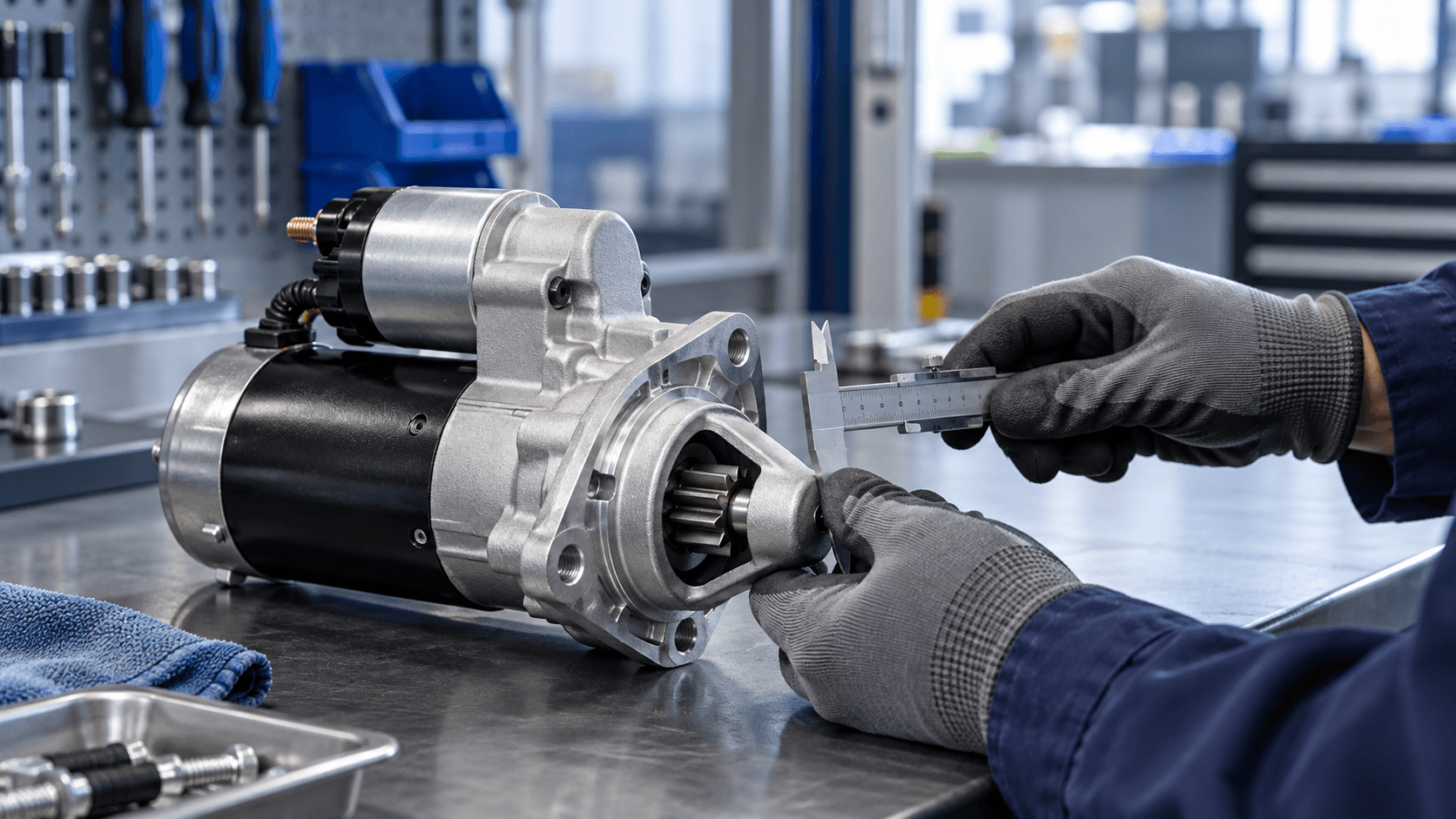
Nominal voltage must match the vehicle. Rated power is relevant but is not a stand-alone key. Confirm rotation using a stated viewing convention, and confirm tooth count together with pinion geometry and engagement position.
Compare bolt pattern, flange, pilot location, nose length, terminal position, solenoid control terminal and plug keying. A unit can bolt up but still be unsuitable if the harness cannot reach or terminal layout conflicts with surrounding parts.
READY TO CHECK A REFERENCE?
Share the part number and application details before you order.
Control the bulk order
The purchase order should list supplier reference, accepted OE references, voltage, kW when applicable, rotation convention, tooth count, mounting notes, terminal notes, quantity and packaging version.
For mixed orders, inspect selected inner cartons across references, not only outer pallets. Keep an approved sample and product-label photos with the PO so the receiving team can detect a wrong mix before stock is distributed.
Prepare for installation and returns
Technicians should compare the new unit with the removed unit and inspect cables, battery state, engine ground, start control and ring gear. A slow crank can have causes beyond the starter motor.
Track verified fitment returns separately from installation-related and undetermined returns. Consistent return data improves catalogue accuracy and speeds technical resolution.
FAQ
Common buyer questions
Is tooth count enough to identify a starter motor?
No. It must be checked with pinion geometry, rotation, nose housing, mounting, voltage, power and terminals.
What if there is no part number?
Provide photographs from all sides, vehicle data, mounting and pinion measurements where possible, terminal details and required quantity.
NEXT STEP
Turn your requirement into a controlled quotation.
Send your confirmed references, target market, expected quantities and packaging requirements. We will begin with the information that can be checked.