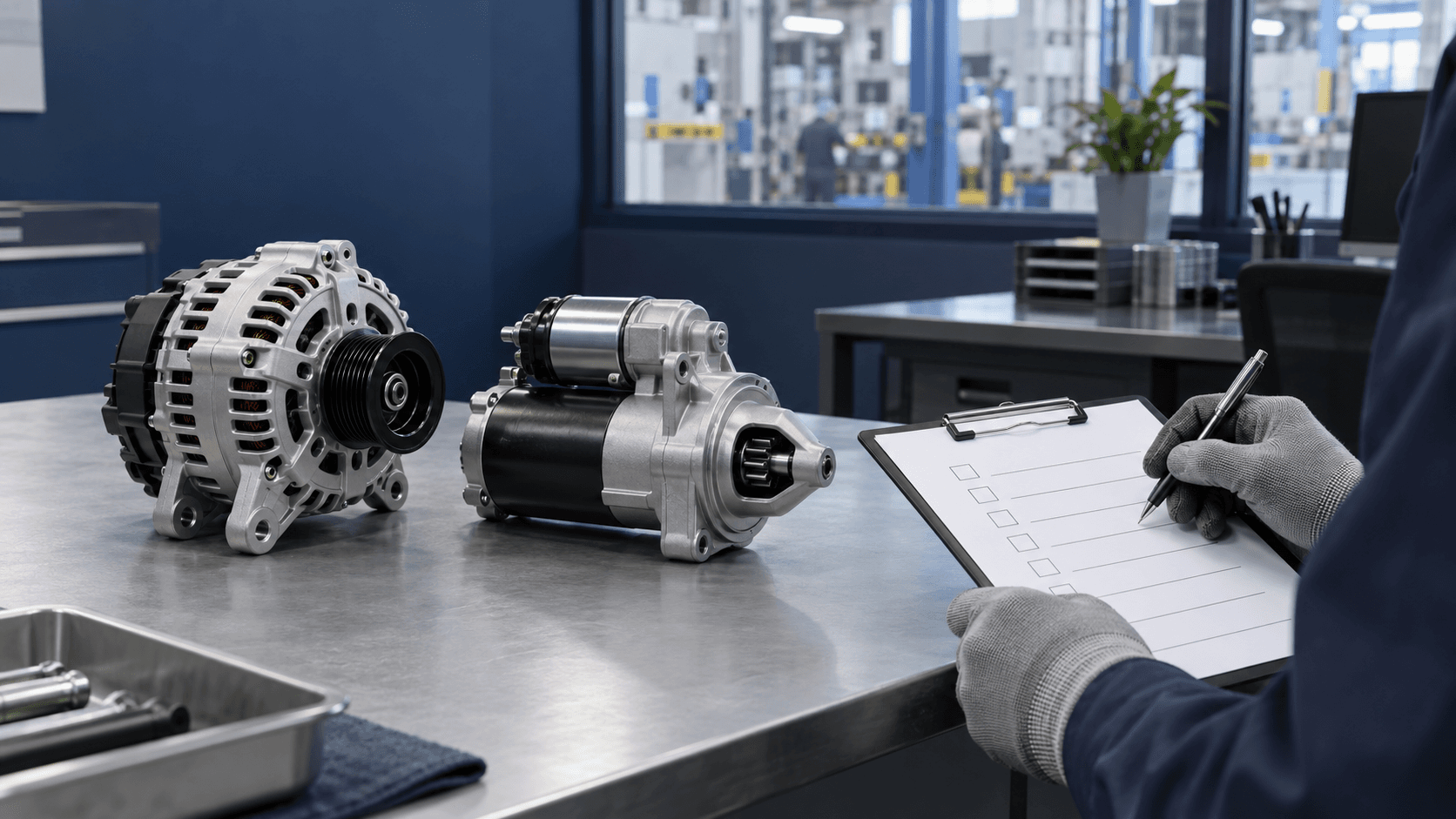
The direct answer
New and remanufactured rotating-electrics programmes can both fit legitimate aftermarket needs. The decision depends on core availability, return logistics, vehicle age, required range, quality control and the buyer’s ability to support warranty cases.
Do not compare offers only by unit price. First define the product condition and the commercial process behind it.
Define the product condition
A new unit is sold as a newly manufactured assembly, but it still requires defined application data, inspection process and labelling requirements.
A remanufactured unit starts with a used core and should have a documented restoration and test process. “Rebuilt” and “repaired” are used inconsistently, so treat these words as prompts for questions rather than quality grades.
Compare the operating model
A new-unit programme can simplify export sourcing when core collection and cross-border return logistics are impractical. A reman programme may fit a mature local market with reliable core collection, grading and credit controls.
Model the entire system: freight, customs, packaging, inspection, failure handling, warranty reserve, core deposits, reverse logistics and stock segregation.
READY TO CHECK A REFERENCE?
Share the part number and application details before you order.
Choose evidence over marketing labels
For either route, define the acceptance criteria. For new units, this can include reference identity, configuration, test scope where agreed, labelling, packaging and batch traceability.
For reman, add core eligibility, components replaced, test scope, grading and warranty handling. If evidence is unavailable, treat it as commercial risk rather than filling the gap with assumptions.
Pilot before range expansion
Start with confirmed fast-moving applications. Approve samples, specify packing, document shipment inspection and collect installation feedback before adding uncertain references.
Keep the specification, mapping source, approved sample photos, label version, shipment record and returns attached to each launched SKU. This creates a checkable answer to the buyer’s question: why is this the right replacement?
FAQ
Common buyer questions
Are remanufactured units always cheaper?
Not after core deposits, reverse logistics, non-return risk, inspection and warranty handling are included.
Does new guarantee correct vehicle fitment?
No. OE/application mapping, electrical configuration, mounting and inspection evidence still need confirmation.
NEXT STEP
Turn your requirement into a controlled quotation.
Send your confirmed references, target market, expected quantities and packaging requirements. We will begin with the information that can be checked.